
Security by Availability: Dynamic vs. Static Systems in Cloud Security
How to Balance Security and Resiliency in the Cloud

Introduction
In an era dominated by digital transformation, cloud security has become a cornerstone of modern IT infrastructure. The debate between static and dynamic systems in cloud security is a heated one, with each approach offering distinct advantages and challenges. This post delves into the intricacies of these two systems, examining their security and resiliency to better understand which might best serve your organization.
Static Systems: The "Sitting Ducks"
Static systems are those that maintain a fixed configuration over time. They are often criticized as being "sitting ducks" in the face of evolving cyber threats. However, they come with their own set of advantages.
Static Systems: Pros and Cons
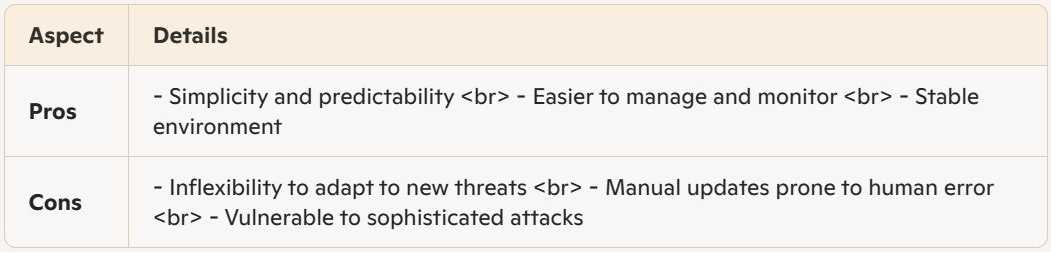
The simplicity and predictability of static systems make them easier to manage and monitor. They provide a stable environment that, once secured, remains consistent. This consistency can be a boon for smaller organizations with limited IT resources. On the flip side, static systems can be inflexible and slow to adapt to new threats, making them vulnerable to sophisticated attacks. They require regular manual updates and patches, which can be time-consuming and prone to human error.
Dynamic Systems: The Adaptive Approach
Dynamic systems, in contrast, are designed to adapt and change in response to real-time threats. These systems leverage automation and advanced algorithms to detect and respond to threats as they arise.
Dynamic Systems: Pros and Cons
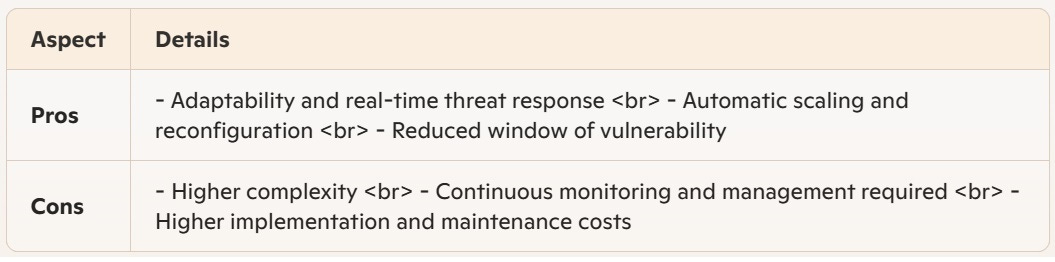
The primary advantage of dynamic systems is their adaptability. They can scale up or down, reconfigure themselves, and apply patches automatically, reducing the window of vulnerability. This makes them particularly suitable for large enterprises with complex IT environments. However, dynamic systems come with their own challenges. They are inherently more complex, requiring continuous monitoring and management. The cost of implementing and maintaining dynamic systems can be higher, and they demand a skilled workforce to manage them.
Security and Resiliency Comparison
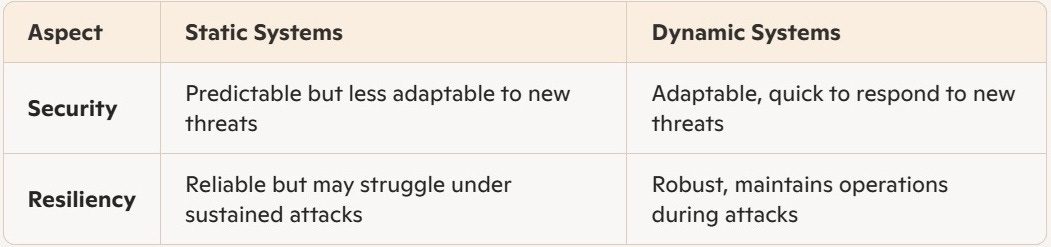
When it comes to security, dynamic systems have the upper hand due to their ability to adapt to new threats swiftly. However, static systems offer a level of predictability that can be beneficial in maintaining a baseline of security. In terms of resiliency, dynamic systems are more robust, capable of maintaining operations during attacks by dynamically rerouting traffic or spinning up new instances. Static systems, while reliable, may struggle to maintain functionality under sustained attacks.
Security by Availability
The concept of security by availability underscores the importance of keeping services accessible and operational as a critical component of security. By ensuring high availability, organizations can mitigate the impact of attacks and reduce downtime. This approach complements traditional security measures, adding an additional layer of defense through redundancy and failover mechanisms.

Conclusion
Both static and dynamic systems have their place in cloud security. The choice between the two depends on the specific needs and capabilities of an organization. Smaller organizations may find the simplicity of static systems appealing, while larger enterprises may benefit from the adaptability of dynamic systems. Ultimately, the goal is to achieve a balanced approach that ensures both security and resiliency in an ever-evolving threat landscape.

A Tale of Two Systems: Serenity vs. Dynamic Defense is more appealing to attackers?
What’s your stance on the static vs. dynamic debate?